
1 m × 7.25 m bath
Hot & Cold Dip Galvanizing
Hot dip galvanizing at 2,500 tonnes a month in a bath up to 1 m × 7.25 m, plus a cold dip line at 50 tonnes a month — to IS 4759 or ISO 1461. Job work for external fabricators is welcome.
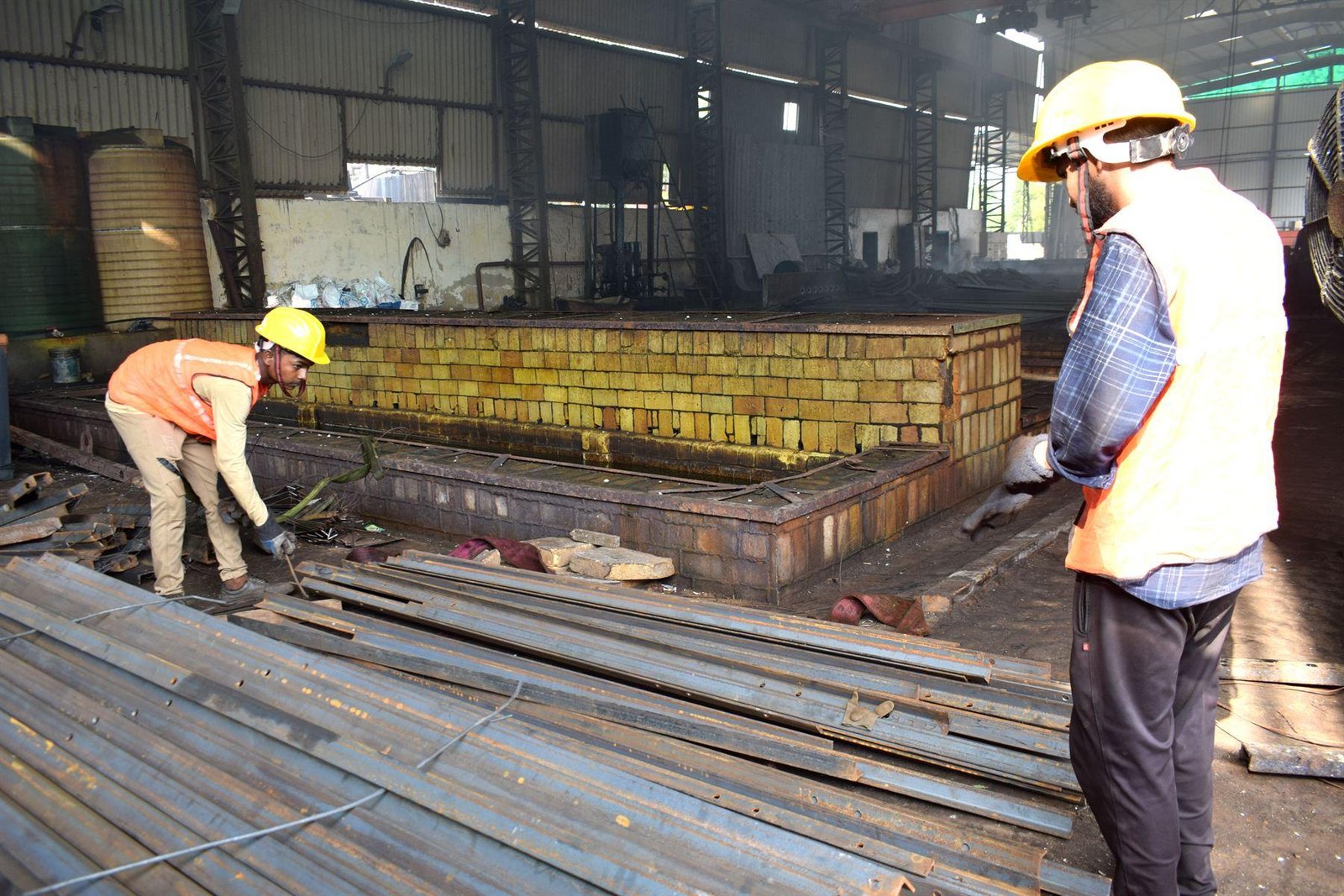
Members leaving the zinc bath
Overview
The first question every fabricator asks, answered up front.
Hot dip capacity. Cold dip line at 50 tonnes a month.
External fabricators welcome alongside our own output.
Coating we control.
Galvanizing was added to the campus for a specific reason: coating was the step that most often delayed tower and structure delivery when it sat with a third party.
Keeping it in-house lets us control coating quality and turnaround on our own structural output — and we sell the same capacity as job work to external fabricators who face the queues we used to.
Technical data
Specification.
Built to the purchaser's schedule. Fields marked On enquiry are issued against a specific enquiry. Delivery as per the client's requirement, confirmed with the quotation. Open the rows below for construction details, reference tables and fittings.
Facility
| Parameter | Specification |
|---|---|
| Process | Hot dip galvanizing and cold dip (electro) galvanizing |
| Hot dip bath size | Up to 1 m × 7.25 m |
| Hot dip capacity | 2,500 tonnes per month |
| Cold dip bath size | Up to 1 m × 3 m |
| Cold dip capacity | 50 tonnes per month |
| Job work | Small lots upward; turnaround On enquiry by tonnage band |
Coating
| Parameter | Specification |
|---|---|
| Coating standard | IS 4759:1996; ISO 1461:2009 where specified |
| Process standard | IS 2629:1985 |
| Zinc bath temperature | 445 to 465 °C |
| Zinc purity | To IS 209 |
| Pickling | Hydrochloric or sulphuric acid, per IS 2629 |
| Embrittlement precautions | Per IS 6158 for high tensile steel |
| Certificate issued | Coating mass, uniformity and adhesion results with every lot |
Reference data — what the standards requireTables from the Indian Standard, for checking any quotation against it
Coating requirements — both standards side by side
| Product class | Minimum coating mass (g/m²) | Indicative thickness (µm) |
|---|---|---|
| Grey iron and malleable iron castings | 610 | ~86 |
| Fabricated steel 5 mm thick and above | 610 | ~86 |
| Fabricated steel 2 to 5 mm thick | 460 | ~65 |
| Fabricated steel 1.2 to 2 mm thick | 340 | ~48 |
| Threaded work 10 mm diameter and above | 300 | ~42 |
| Threaded work under 10 mm diameter | 270 | ~38 |
IS 4759 specifies mass, not thickness — that is the key difference from ISO 1461. The thickness column is a derived conversion at 7.14 g/m² per micron and is indicative only.
| Article and thickness | Local thickness min (µm) | Local mass min (g/m²) | Mean thickness min (µm) | Mean mass min (g/m²) |
|---|---|---|---|---|
| Steel above 6 mm | 70 | 505 | 85 | 610 |
| Steel above 3 up to 6 mm | 55 | 395 | 70 | 505 |
| Steel 1.5 to 3 mm | 45 | 325 | 55 | 395 |
| Steel under 1.5 mm | 35 | 250 | 45 | 325 |
| Castings 6 mm and above | 70 | 505 | 80 | 575 |
| Castings under 6 mm | 60 | 430 | 70 | 505 |
ISO 1461 distinguishes local from mean values; IS 4759 does not. For the heaviest class the two land in the same place — 610 g/m² either way. That equivalence is the question buyers cross-referencing an ISO-written specification against an Indian galvanizer ask most often.
Acceptance tests
| Test | Standard | Requirement |
|---|---|---|
| Mass of zinc coating | IS 6745:1972 | Stripping / gravimetric method against IS 4759 Table 1 |
| Uniformity of coating | IS 2633:1986 | Four one-minute dips in copper sulphate without adherent copper deposit |
| Adhesion | IS 2629:1985 | Pivoted hammer and knife test — no flaking or peeling ahead of the tool |
| Freedom from defects | IS 4759 cl. 6.2 | Uniform, adherent, free from flux, ash, bare patches, blisters and runs |
ISO 1461 notes that no suitable international standard exists for adhesion testing of hot dip galvanizing on fabricated articles. IS 2629's hammer and knife tests therefore give a more defined adhesion criterion than ISO does.
Standard and optional fittingsWhat is supplied as standard, and what is available to order
Process
The galvanizing line
- Degreasing
- Acid pickling
- Rinsing
- Fluxing
- Drying and pre-heating
- Hot dip in molten zinc at 445–465 °C
- Quenching and passivation
- Inspection, coating check and dispatch
Before you send work
Design for galvanizing
- Venting and draining holes are mandatory in all tubular and hollow sections — this is a pressure hazard and the single most common reason work is rejected
- Follow IS 2629 and ASTM A385 for hole placement and size
- Avoid overlapping surfaces that cannot be sealed or vented
- Tell us the steel grade — high tensile steel needs embrittlement precautions per IS 6158
- Mark articles that must not be quenched
- Advise if the article has been previously painted or coated
Compliance
Standards & testing.
Routine tests are performed on every unit before dispatch. Type tests are certified from CPRI, ERDA or NABL-accredited laboratories on request.
| Standard | Scope |
|---|---|
| IS 2629:1985 | Recommended practice for hot dip galvanizing of iron and steel — the process standard |
| IS 4759:1996 | Hot dip zinc coatings on structural steel and other allied products — the product standard |
| IS 6745:1972 | Determination of mass of zinc coating on zinc coated iron and steel articles |
| IS 2633:1986 | Methods for testing uniformity of coating of zinc coated articles |
| IS 6158:1984 | Precautions against embrittlement of hot dip galvanized structural steel |
| ISO 1461:2009 | Hot dip galvanized coatings on fabricated iron and steel articles |
| ASTM A385 | Practice for providing high quality zinc coatings — venting and drainage guidance |
Inside the works
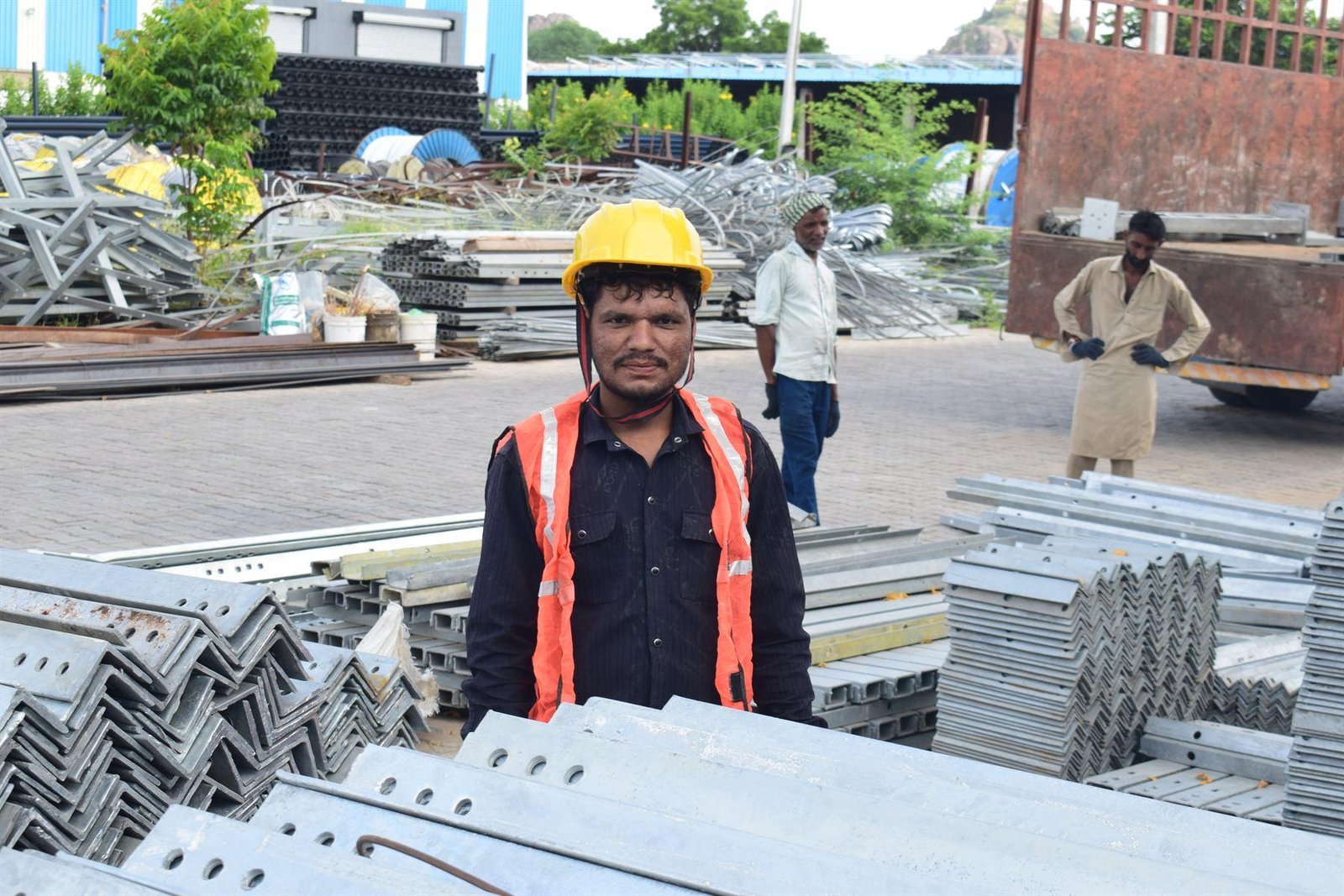
The galvanizing line.
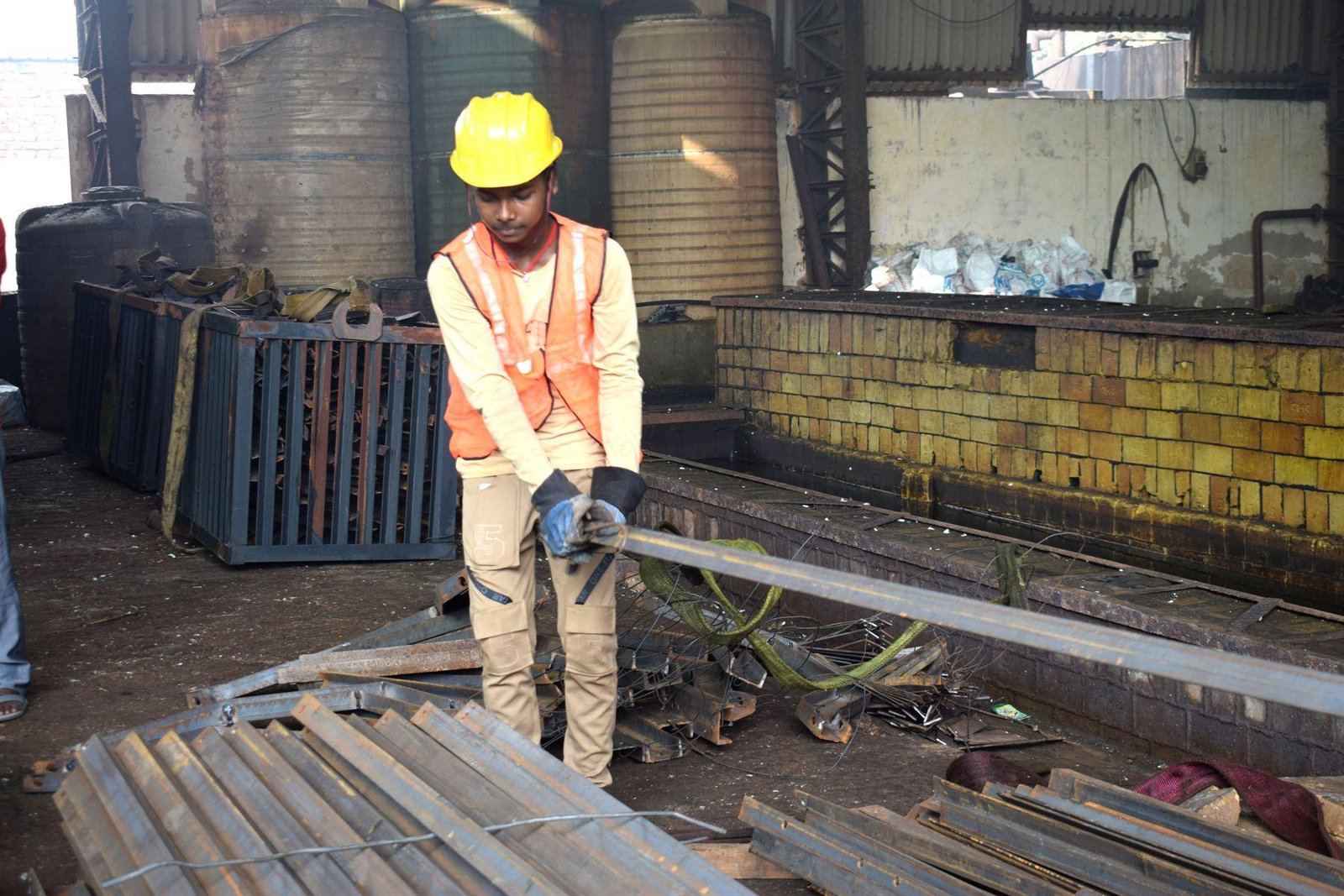
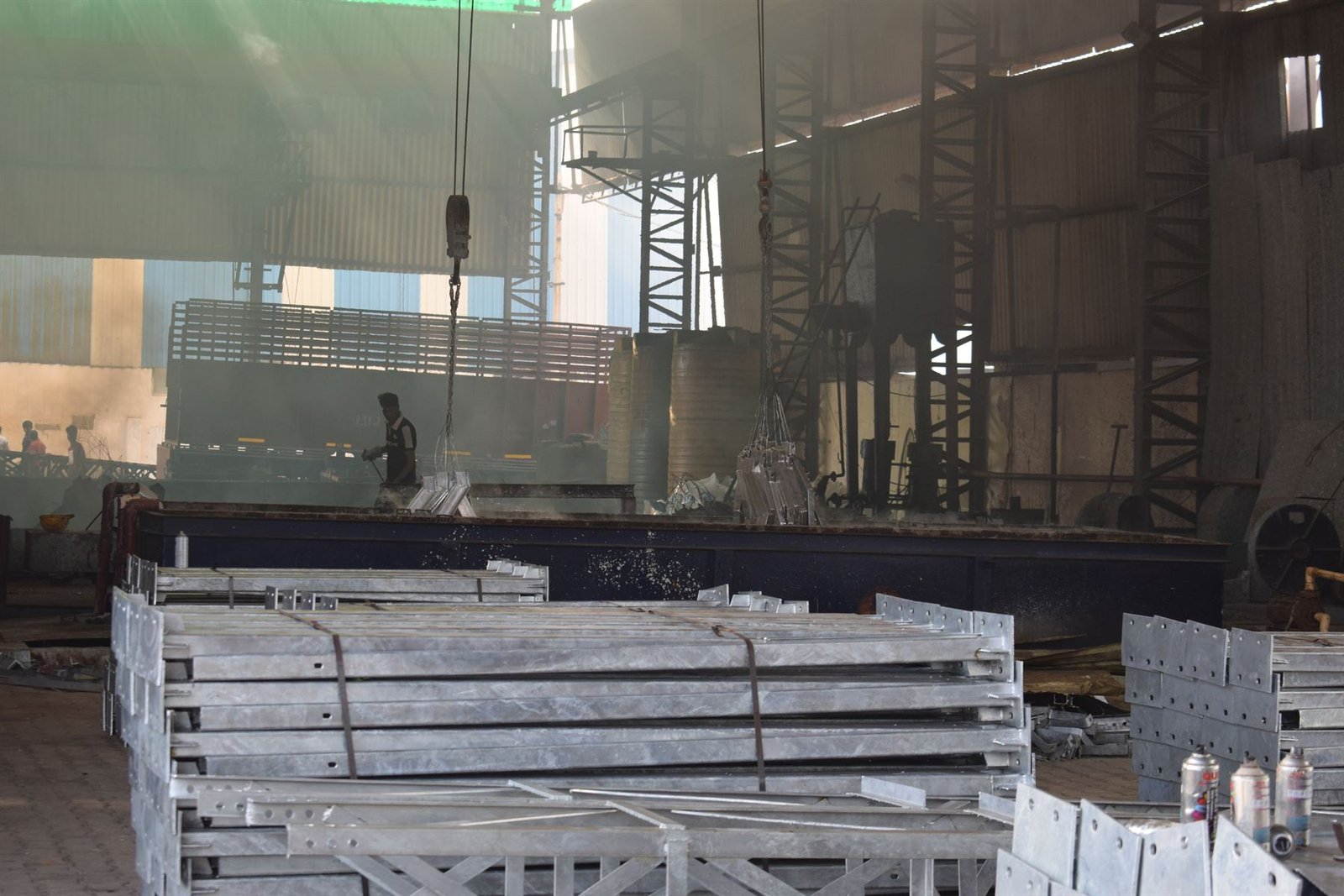
Pickling tanks, flux and the zinc bath sit alongside the fabrication bays they serve.
Walk the whole works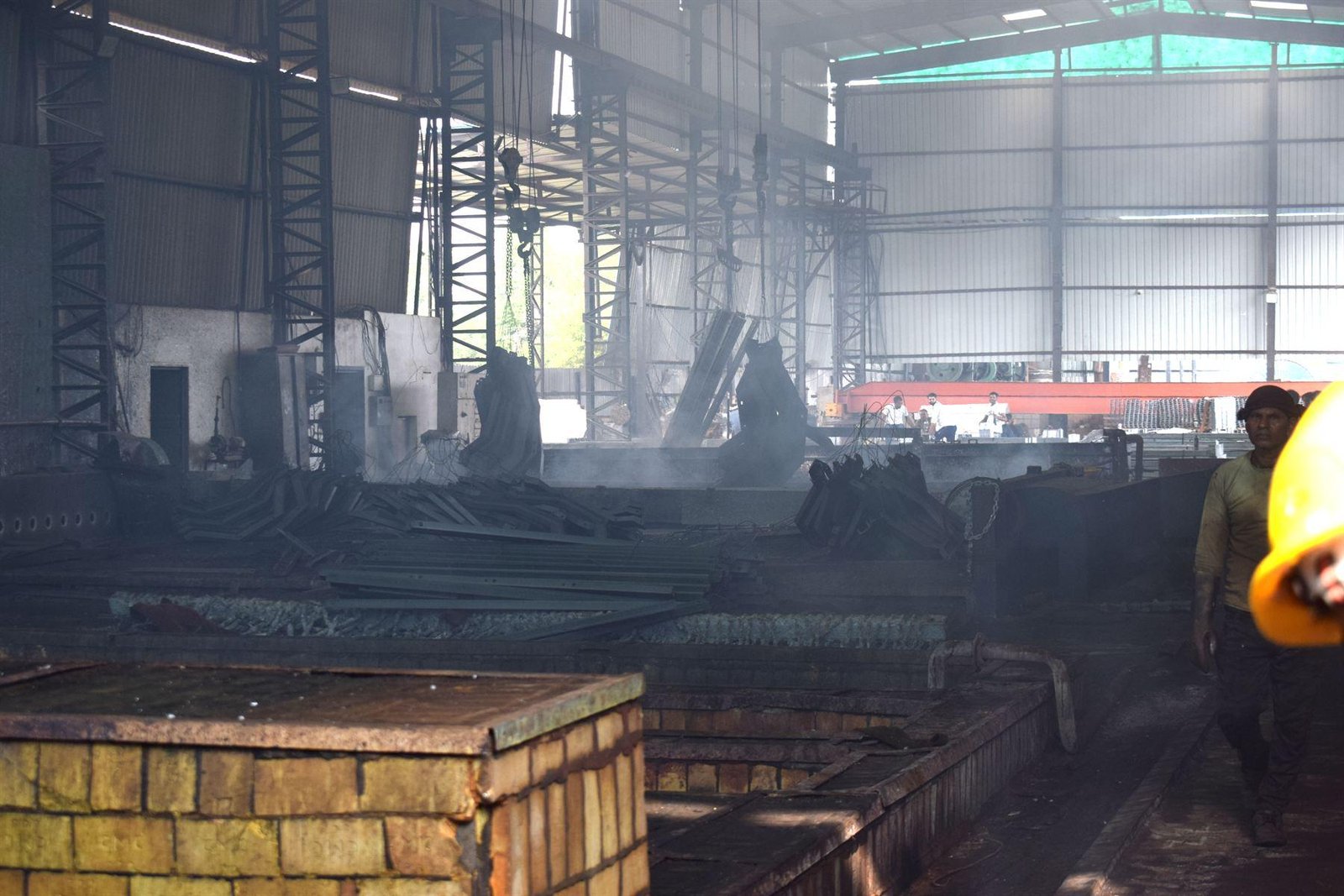
Applications
Where it goes to work.
Towers and structures
Every tower, gantry and cross-arm we fabricate.
External fabricators
Job-work galvanizing for other fabricators and contractors.
Structural steel
Bridge, building and industrial steelwork.
Line hardware
Cross-arms, brackets, clamps and pole fittings.
Questions
Frequently asked.
What is the maximum size you can galvanize?
Do you accept job work from outside fabricators?
Do you coat to IS 4759 or ISO 1461?
Why do my hollow sections need holes?
Often supplied together
Send us your galvanizing job.
Tell us the tonnage, section sizes and coating specification and we will confirm turnaround.