
300 poles / day
PCC Poles
Prestressed concrete poles cast at 300 a day, designed and tested to IS 1678:1998 with dimensions to your utility's standard drawing. This is where the business started in 2006.
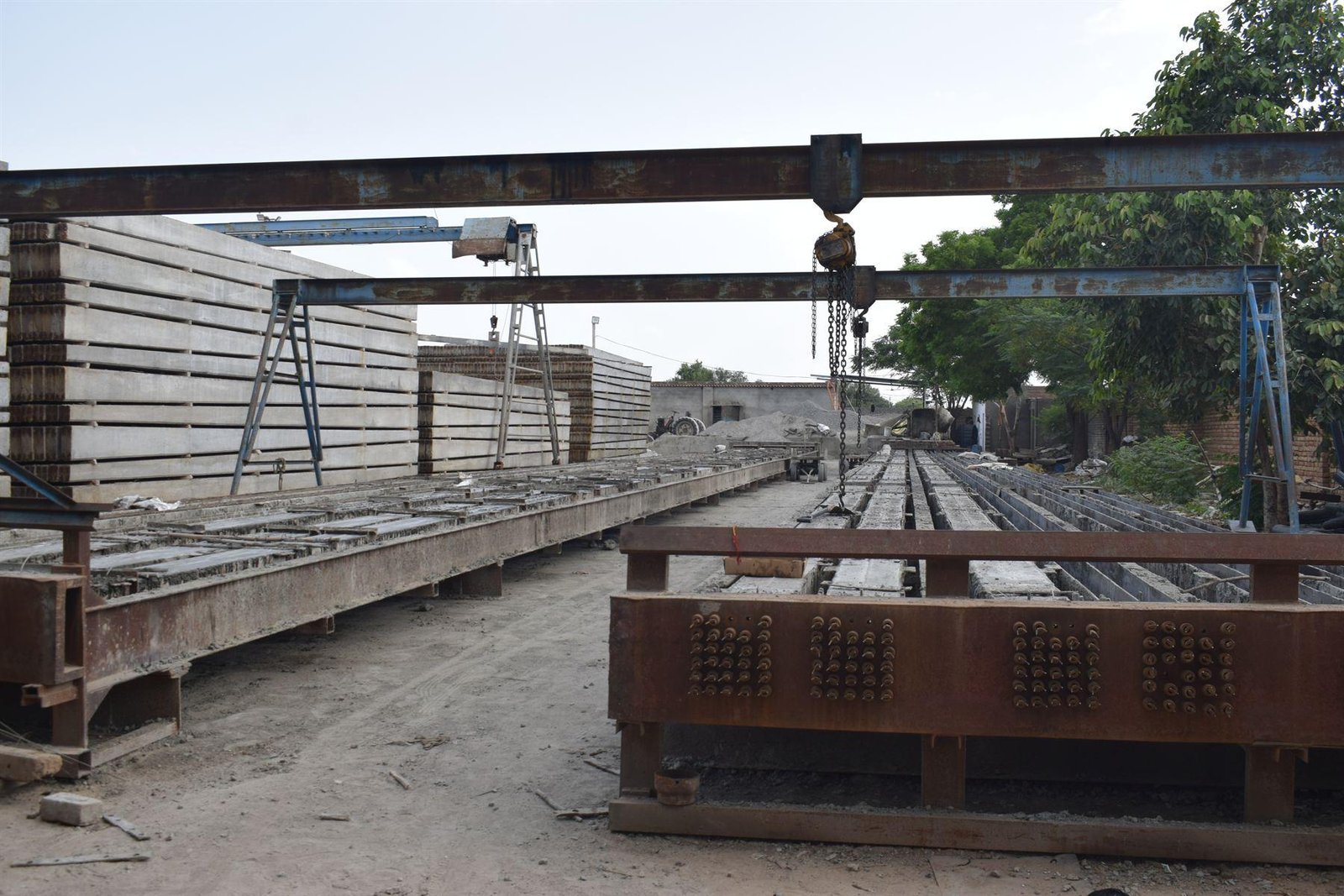
Pole casting beds under the gantry
Overview
The highest-volume line on the campus.
Designed and transverse-strength tested to the prestressed concrete pole standard.
The founding product line, still running.
The line we were founded on.
Everything else on this campus was added around the pole yard. Twenty years on it still runs at 300 poles a day, and it remains the product most closely tied to the rural electrification work that built our field record.
One point of accuracy that matters: neither IS 1678 nor IS 785 contains a table of pole dimensions. They are performance standards — they fix the concrete grade, the load factor, the cover, the planting depth and the test method, and leave the section geometry to the standard drawing. A pole dimension table captioned “as per IS 1678” is therefore wrong, and a knowledgeable buyer will notice. We build to IS 1678 and to your drawing, and we say which is which.
Technical data
Specification.
Built to the purchaser's schedule. Fields marked On enquiry are issued against a specific enquiry. Delivery as per the client's requirement, confirmed with the quotation. Open the rows below for construction details, reference tables and fittings.
General
| Parameter | Specification |
|---|---|
| Product | Precast prestressed concrete (PSC/PCC) poles |
| Lengths | 9 m and 11 m standard; other lengths as per client request |
| Working load classes | Typically 140, 200, 280 and 300 kg — to your standard drawing |
| Section | Rectangular tapered, constant width with tapering depth |
| Design standard | IS 1678:1998 |
| Dimensions | To utility or REC standard drawing — not defined by IS 1678 |
| Daily capacity | 300 poles |
Construction
| Parameter | Specification |
|---|---|
| Concrete grade | Not less than M40 per IS 1678 |
| Prestressing steel | High tensile wire, tensioned and untensioned as per drawing |
| Cover to reinforcement | Per drawing, minimum per IS 1678 |
| Curing | Steam or water cured |
| Load factor on transverse strength | Not less than 2.5 |
| Design load applied | 600 mm below the top |
| Marking | Manufacturer identification, month and year, serial number, and centre of gravity marked C.G. |
Reference data — what the standards requireTables from the Indian Standard, for checking any quotation against it
What the standards actually fix
| Requirement | IS 1678:1998 — prestressed | IS 785:1998 — reinforced |
|---|---|---|
| Minimum overall length | 6 m, thereafter in steps of 0.5 m | 6 m to 9 m, steps of 0.5 m |
| Concrete grade | Not less than M40 | Not less than M25 |
| Load factor on transverse strength | Not less than 2.5 | Not less than 2 |
| Design load applied | 600 mm below the top | 600 mm below the top |
| Transverse strength test | IS 2905 | IS 2905 |
| Crack criterion | No crack wider than 0.1 mm before design load | As IS 785 |
| Planting depth | 1.20 m for 6–7 m, up to 2.40 m for 17 m | 1.20 m for 6–7 m; 1.50 m for 7.5–9 m |
Neither standard contains a dimension table. Both are performance standards. Section geometry comes from the utility or REC standard drawing, and that is how it should be described on any specification sheet.
Standard and optional fittingsWhat is supplied as standard, and what is available to order
Scope
What we supply
- 9 m and 11 m PSC poles as standard; other lengths as per client request
- Working load classes to purchaser specification
- Cast, cured and stacked on site
- Bulk supply against utility rate contracts
- Loading and dispatch from our own yard
- Supplied alongside conductor, cable and transformers as a package
Process
How a pole is cast
- Mould preparation and release agent
- Prestressing wire tensioned in the mould
- Cage and spacer placement
- Concrete placement and vibration
- Steam or water curing
- De-tensioning and demoulding
- Stacking, marking and yard storage
Compliance
Standards & testing.
Routine tests are performed on every unit before dispatch. Type tests are certified from CPRI, ERDA or NABL-accredited laboratories on request.
| Standard | Scope |
|---|---|
| IS 1678:1998 | Prestressed concrete poles for overhead power, traction and telecommunication lines |
| IS 785:1998 | Prestressed concrete poles for overhead power and telecommunication lines — reinforced type |
| IS 2905 | Methods of test for concrete poles |
| IS 516 | Methods of test for strength of concrete |
| IS 1343 | Code of practice for prestressed concrete |
Routine and type testsPerformed on every unit, and available on request
Routine tests
Performed on every unit
- Dimensional check against drawing
- Concrete compressive strength — IS 516
- Transverse strength test — IS 2905
- Crack width observation up to design load
- Uprightness and straightness
Purchaser and third-party pre-dispatch inspection is accommodated on request, including for export consignments. Type-test certificates are issued from CPRI, ERDA or NABL-accredited laboratories — copies available on request.
Inside the works
The casting yard.
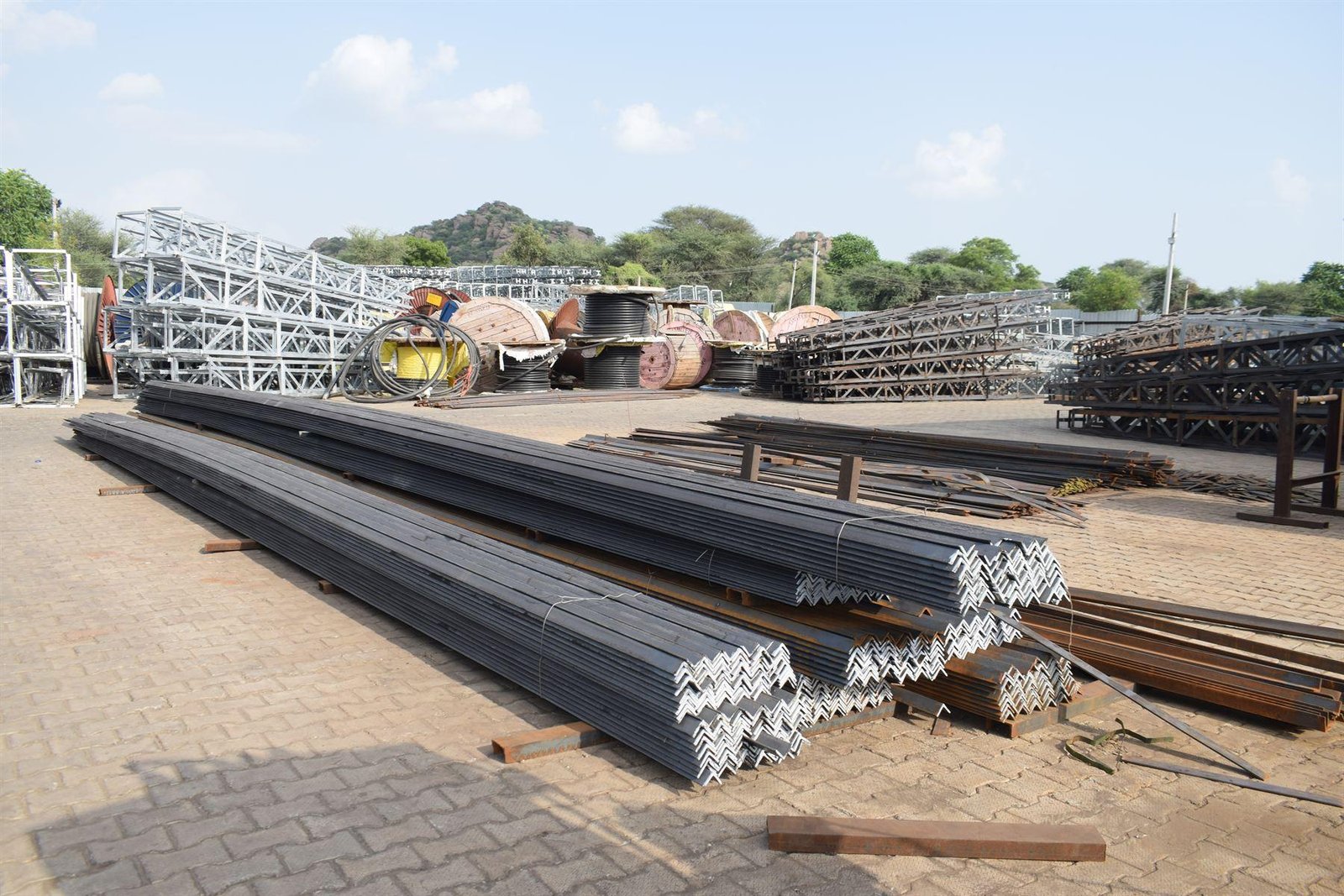
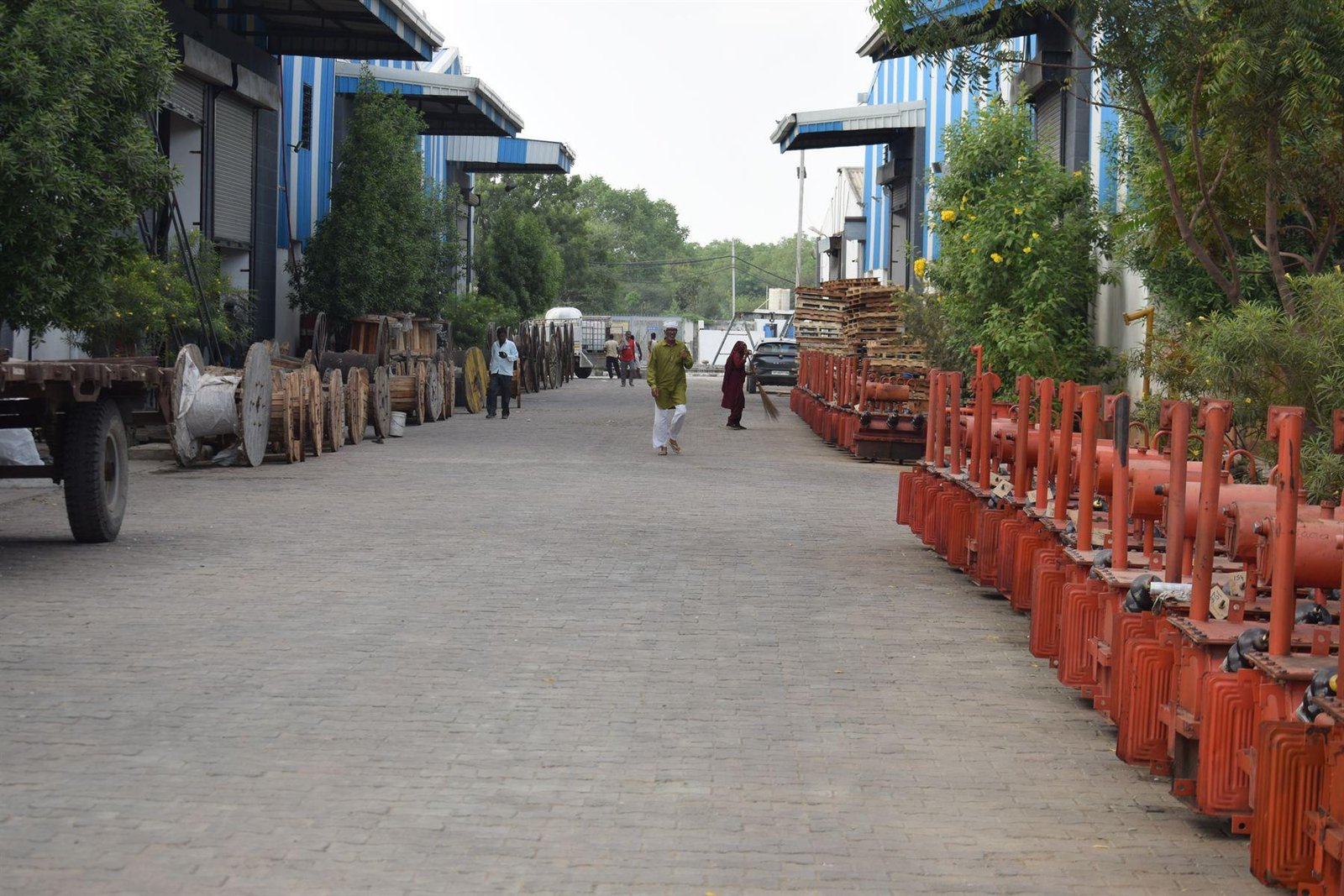
Moulds, curing beds and stacking all sit within the campus boundary.
Walk the whole works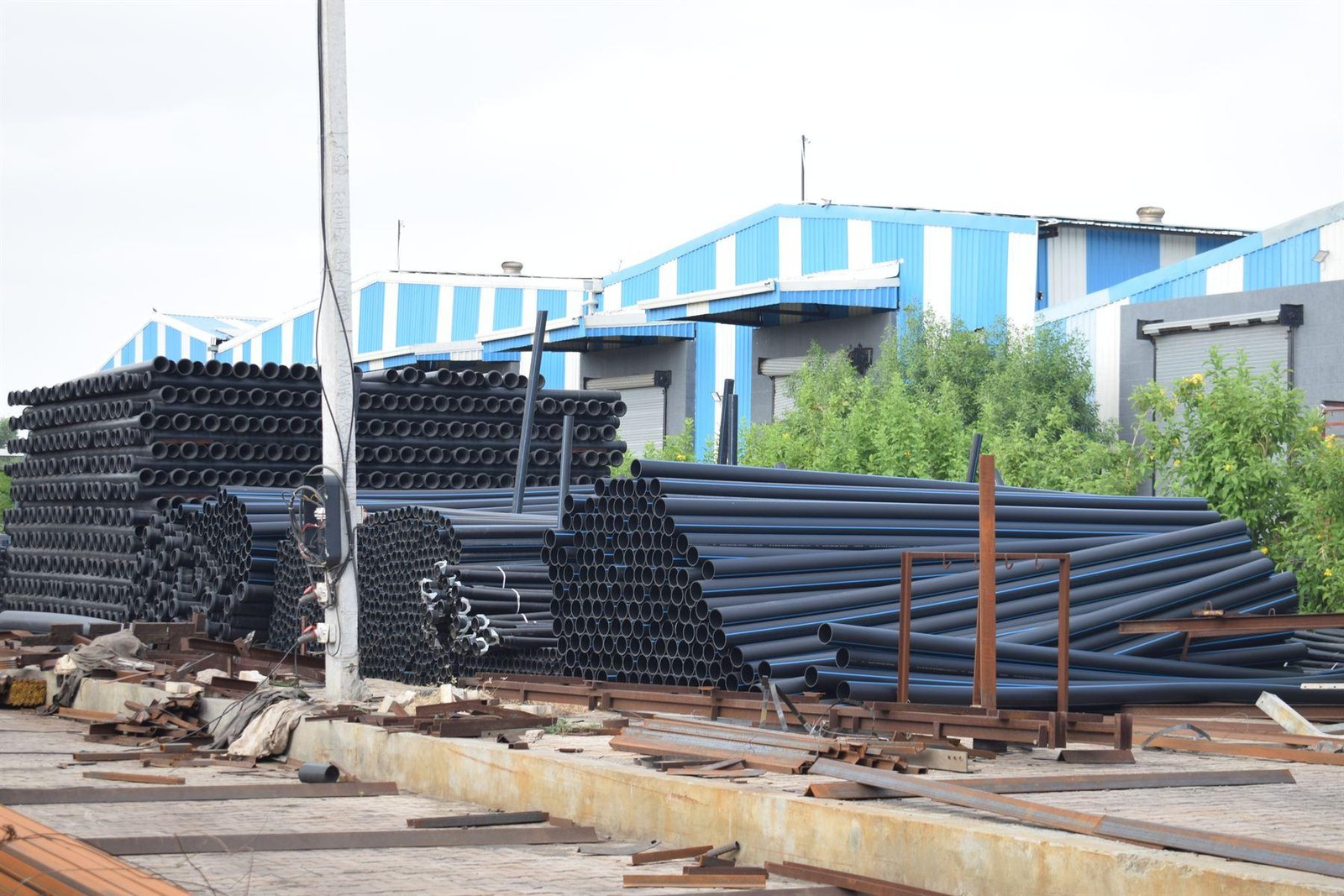
Applications
Where it goes to work.
LT and 11 kV distribution
Standard distribution pole for rural and urban networks.
Village electrification
Bulk supply under national electrification schemes.
Street lighting
Pole supply for municipal lighting installations.
Private networks
Estate and plant distribution lines.
Questions
Frequently asked.
What pole lengths and load classes do you make?
Are your pole dimensions “as per IS 1678”?
How is the pole tested?
Often supplied together
Ask about pole rate contracts.
Tell us the lengths, load classes, standard drawing and monthly offtake, and we will quote a rate contract with a delivery programme.