
1 kVA – 5000 kVA
Servo Voltage Stabilisers
Servo voltage stabilisers from 1 kVA to 5000 kVA — stepless correction by copper-wound variac, ±1% output regulation and full protection, built to IS 9815 for sites where the incoming supply will not hold its voltage.
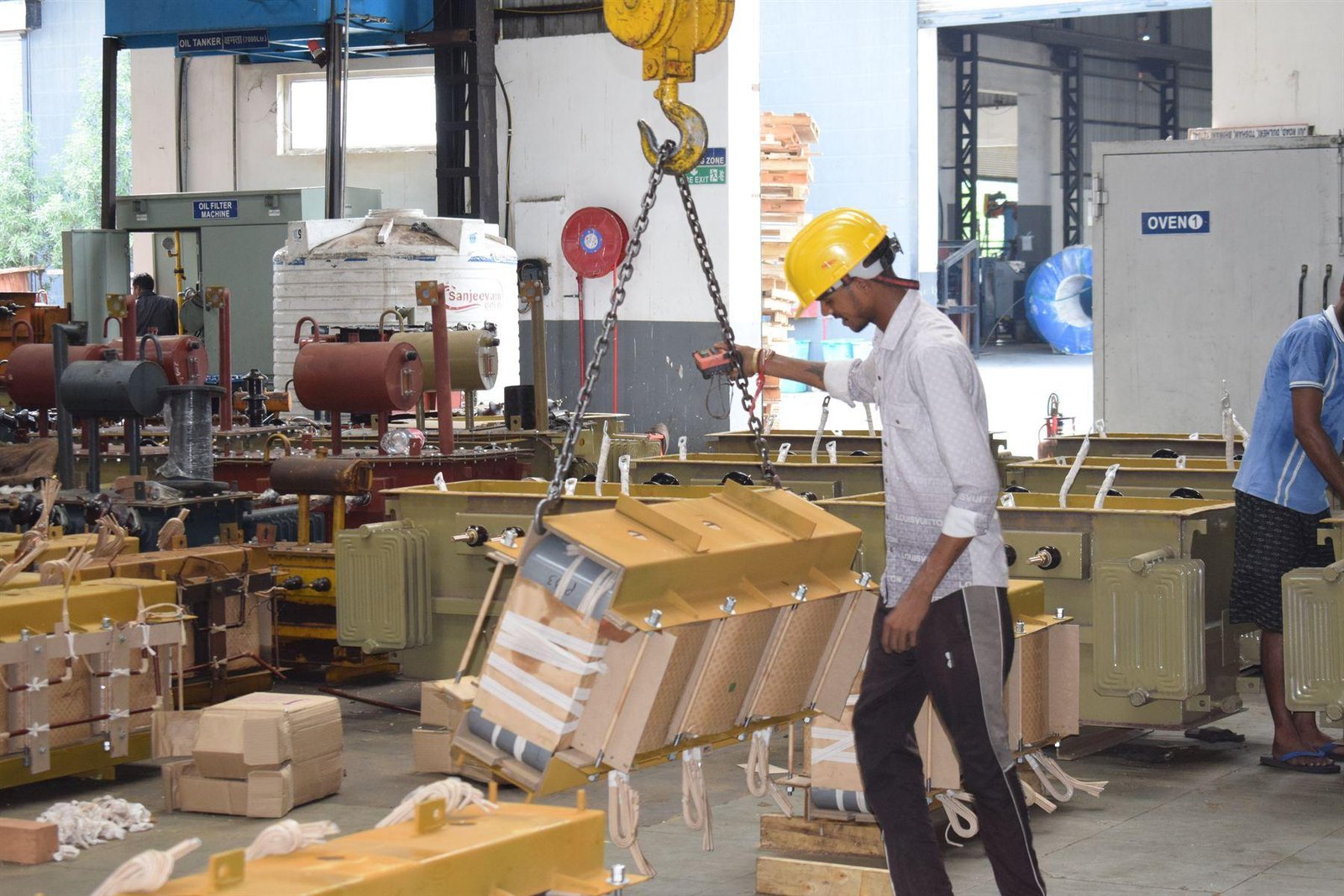
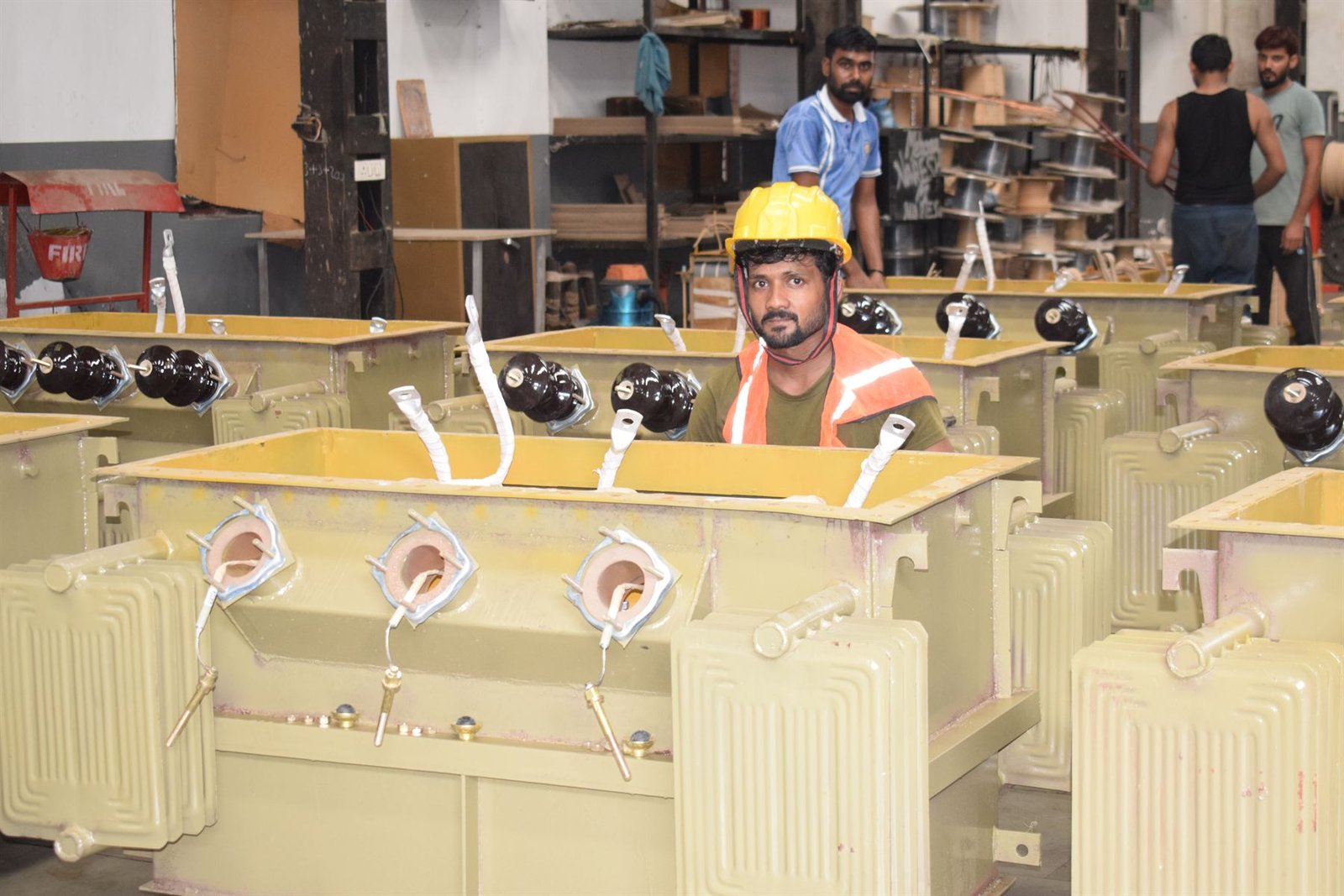
Core-and-coil assembly bay
Overview
Regulation held across the full input range.
Single phase from 1 kVA; three phase to 5000 kVA.
Three-variac construction for unbalanced supplies.
Correction without steps.
A servo stabiliser holds the output voltage steady by continuously varying a motorised variac, rather than switching between fixed taps. That gives smooth correction with no waveform distortion and no switching transient — which matters when the load is a CNC machine, a medical imaging system or a process line rather than a lighting circuit.
Three-phase units are built either as a single-variac design, correcting all three phases together, or as a three-variac design correcting each phase independently. The three-variac construction is the one to specify where the incoming supply is unbalanced, which on most Indian industrial feeders it is.
Technical data
Specification.
Built to the purchaser's schedule. Fields marked On enquiry are issued against a specific enquiry. Delivery as per the client's requirement, confirmed with the quotation. Open the rows below for construction details, reference tables and fittings.
General
| Parameter | Specification |
|---|---|
| Rated capacity | 1 kVA to 25 kVA single phase; 10 kVA to 5000 kVA three phase |
| Phases | Single phase and three phase |
| Cooling | Air natural (AN) on smaller ratings; oil natural (ONAN) on larger |
| Frequency | 50 / 60 Hz ± 5% |
| Duty | Continuous, 24 hours |
| Mounting | Floor mounting, indoor or outdoor enclosure |
| Applicable standards | IS 9815, IS 2026 for the internal transformer, IS 335 for oil |
Electrical
| Parameter | Specification |
|---|---|
| Input range, three phase (line) | 340–460 V, 300–460 V, 250–460 V or 150–460 V — specify |
| Input range, three phase (phase) | 90–270 V, or narrower bands to order |
| Input range, single phase | 140–270 V |
| Output voltage | 380 / 400 / 415 V ± 1% three phase; 230 V ± 1% single phase |
| Correction rate | 10 to 60 V per second — specify |
| Response time | Under 20 milliseconds |
| Efficiency | Above 96% at full load |
| Overload capacity | 110% |
| Waveform distortion | Nil — stepless variac correction introduces none |
| Power factor | 0.8 lagging to unity |
| Insulation class | Class F |
Construction and further particularsMaterials, tank, paint and mechanical details
Construction & protection
| Parameter | Specification |
|---|---|
| Correction element | Copper-wound variac, servo-motor driven; single, double or three-variac |
| Control | Micro-controller based, digital |
| Enclosure | IP21 to IP54, MS cabinet |
| Display | Digital voltmeter and ammeter per phase |
| Over-voltage cut-off | 110% of nominal |
| Under-voltage cut-off | 85% of nominal |
| Overload protection | Current limiting with MCCB or HRC fuse |
| Single-phasing protection | Fitted on three-phase units |
| Ambient | 0 to 45 °C operating; RH up to 95% non-condensing; altitude up to 1000 m |
| Bypass | Manual or automatic changeover to order |
Reference data — what the standards requireTables from the Indian Standard, for checking any quotation against it
Choosing the construction
| Construction | Corrects | Specify it when |
|---|---|---|
| Single variac | All three phases together | The incoming supply is balanced and the correction requirement is modest. |
| Double variac | Two-stage correction | A wider input range is needed than one variac can cover. |
| Three variac | Each phase independently | The incoming supply is unbalanced — the common case on Indian industrial feeders. |
| Rolling contact | High-current duty | The rating is large and brush life on a conventional variac would be the limiting factor. |
Compliance
Standards & testing.
Routine tests are performed on every unit before dispatch. Type tests are certified from CPRI, ERDA or NABL-accredited laboratories on request.
| Standard | Scope |
|---|---|
| IS 9815 (Part 1) | Servo-motor operated automatic line voltage correctors |
| IS 2026 (Parts 1–5) | Power transformers — governs the internal transformer and variac |
| IS 335:2018 | Insulating mineral oil, for oil-cooled ratings |
| IS/IEC 60529 | Degrees of protection provided by enclosures — the IP code |
| IS 5:2007 | Colours for ready-mixed paints and enamels |
Routine and type testsPerformed on every unit, and available on request
Routine tests
Performed on every unit
- Input and output voltage verification across the full input range
- Output regulation accuracy at no load and full load
- Correction rate measurement
- Efficiency measurement at full load
- Insulation resistance
- High voltage withstand test
- Protection setting verification — over-voltage, under-voltage, overload, single-phasing
- Continuous full-load run test
- Oil breakdown voltage for oil-cooled units
Purchaser and third-party pre-dispatch inspection is accommodated on request, including for export consignments. Type-test certificates are issued from CPRI, ERDA or NABL-accredited laboratories — copies available on request.
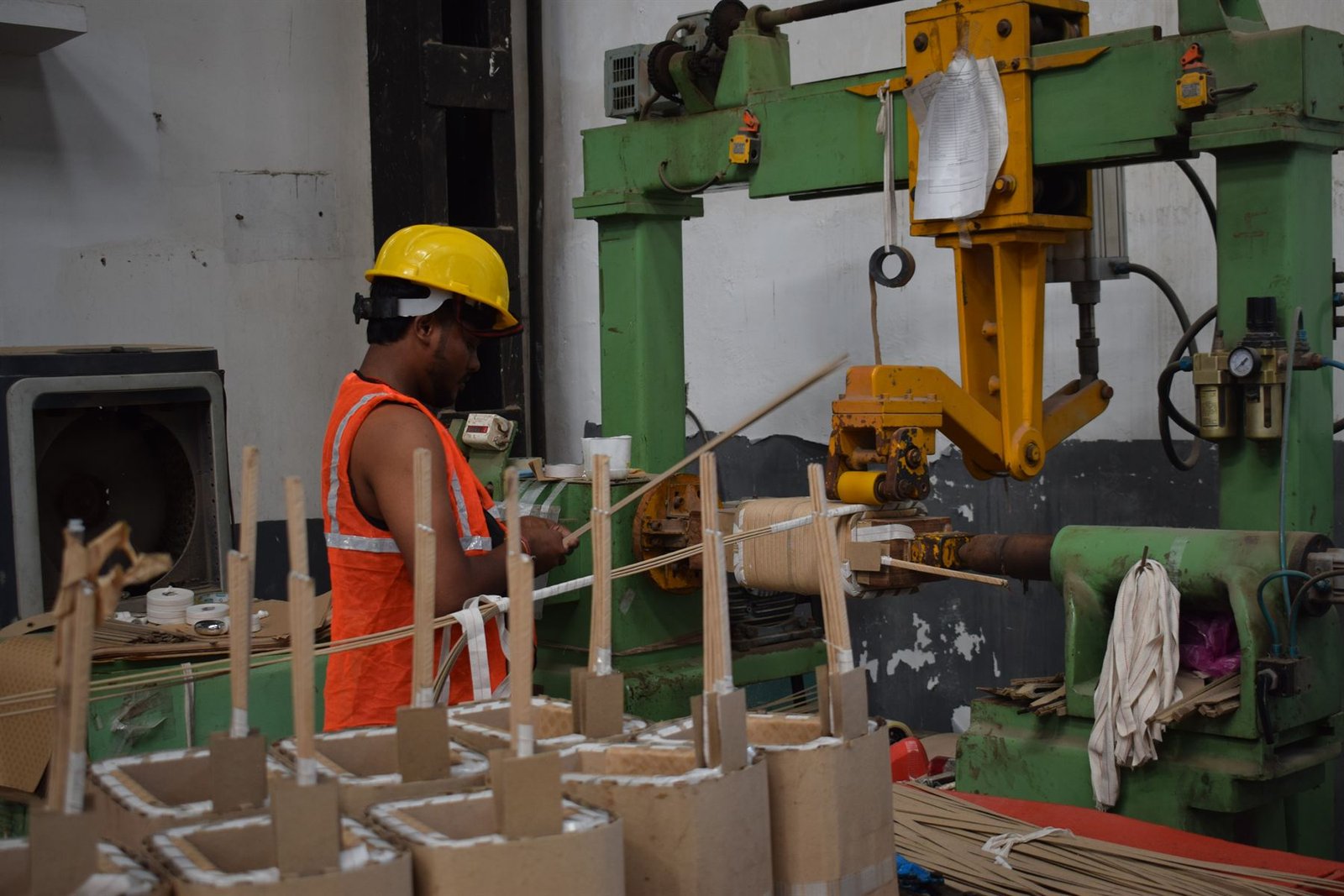
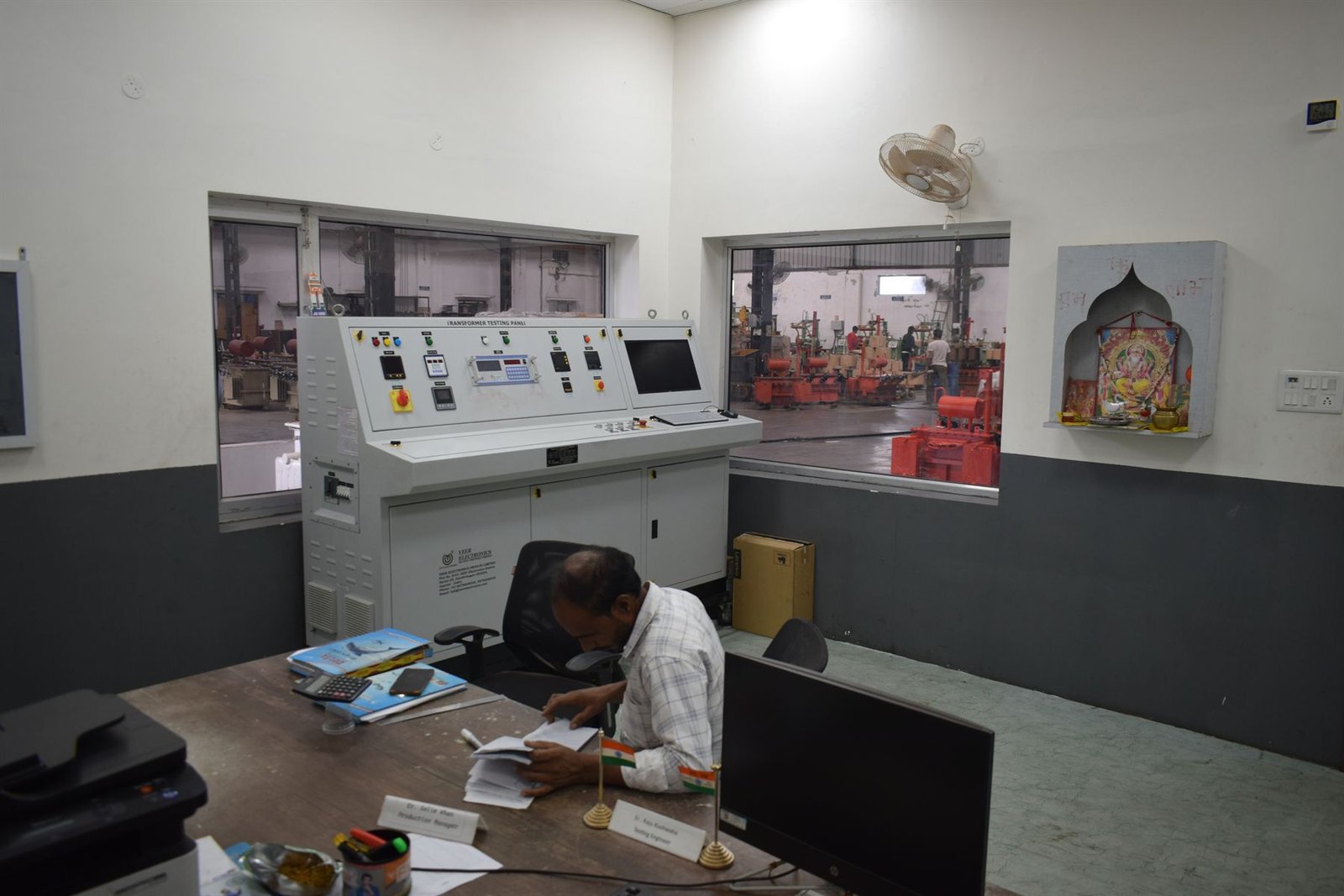
Inside the works
Built alongside the transformer range.
Variacs, tanks and enclosures are produced on the same lines and under the same inspection regime as our transformers.
Walk the whole works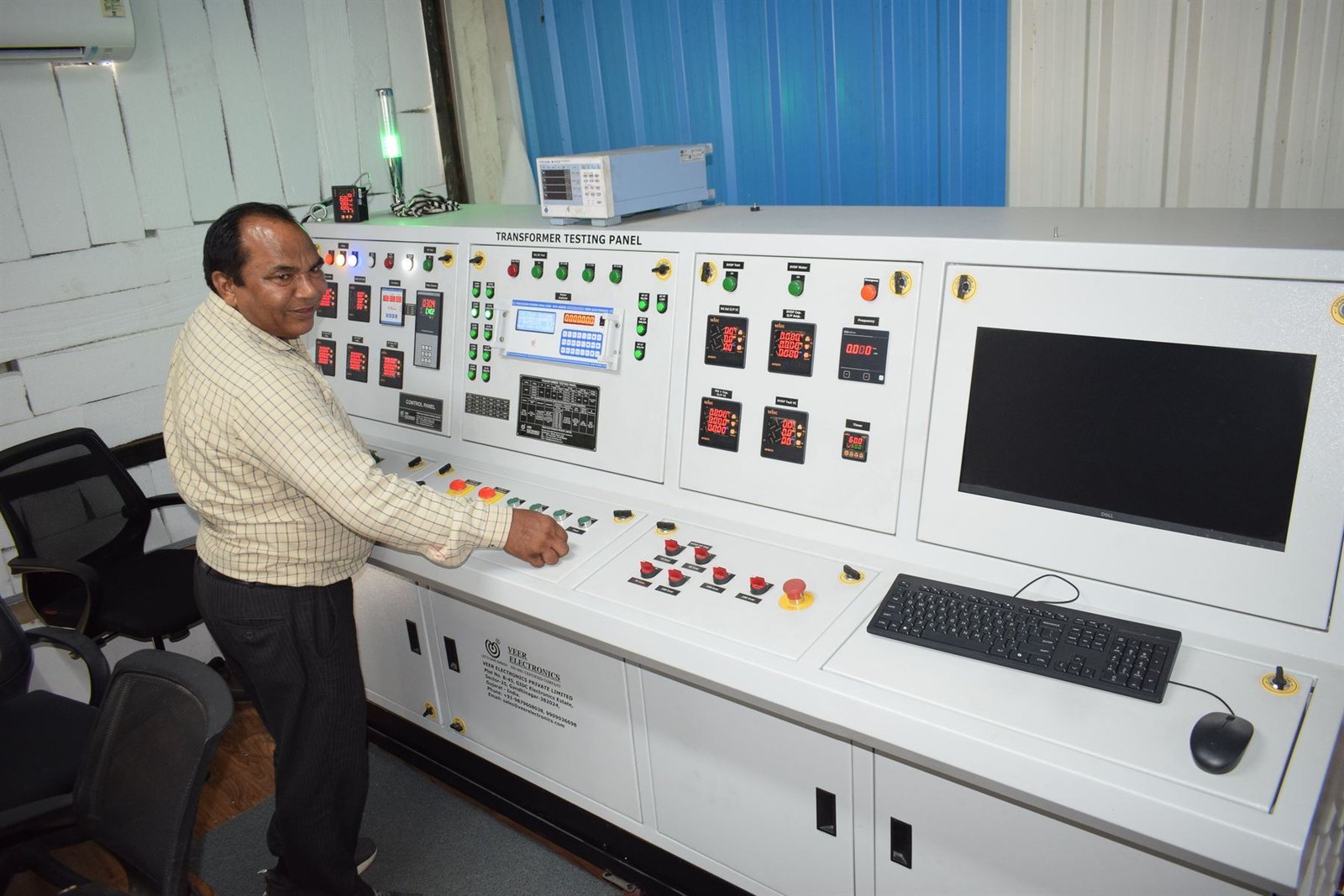
Applications
Where it goes to work.
Process plant
Machine tools, packaging and process lines.
Medical equipment
Imaging and diagnostic installations.
Buildings
Hotels, malls and office complexes.
Pump sets
Rural installations on weak feeders.
Questions
Frequently asked.
What size stabiliser do I need?
What is the difference between a servo stabiliser and a static stabiliser?
Do you supply oil-cooled or air-cooled units?
Can a stabiliser correct an unbalanced supply?
Often supplied together
Tell us what you need to protect.
Send the connected load, the measured incoming voltage range and whether the supply is unbalanced, and we will size and quote the right unit.