India added about 27 GW of solar capacity between January and June 2026, the largest half-year on record and 49 percent more than the 18 GW installed in the same period of 2025. Cumulative solar capacity reached 165 GW at the end of June, about 30 percent of all installed generating capacity in the country. Behind each of those megawatts sits an inverter duty transformer, a pooling substation and a transmission connection, and it is those three items, not the modules, that are now setting the pace.
The numbers
| Period | Solar added | Note |
|---|---|---|
| Q1 2026 (Jan–Mar) | ≈ 15 GW | Highest quarter on record |
| Q2 2026 (Apr–Jun) | ≈ 12 GW | Second highest; 8 GW utility-scale, 4 GW rooftop |
| H1 2026 | ≈ 27 GW | Up 49% on H1 2025 |
| FY2025-26 (Apr 2025–Mar 2026) | ≈ 44.6 GW | Ground-mounted 34.8 GW (+106%), rooftop 8.7 GW (+69%) |
| Cumulative, June 2026 | 165 GW | 83% utility-scale, 17% rooftop |
Sources: Mercom India (half-year and quarterly figures, August 2026); JMK Research (financial-year figures, April 2026).
Why the first half was so strong
Part of the surge was deadline-driven. The Approved List of Models and Manufacturers for solar cells (ALMM List-II) took effect on 1 June 2026, and developers pushed to commission projects before it applied. The phasing-out of the inter-state transmission charge waiver had the same effect: projects commissioned later face higher transmission charges, so the ones that could be finished were. Rooftop additions were lifted by the PM Surya Ghar scheme, which accounts for most of the 69 percent growth in that segment during FY26.
What is slowing the second half
Mercom's reporting is direct about the constraints. Utility-scale commissioning is being held back mainly by limited transmission availability and by domestic cell shortages; several projects are complete but cannot connect because the evacuation infrastructure is not ready. Land acquisition and transmission connectivity take the longest on a developer's programme, and transformer procurement "can involve an eight-month wait".
The transmission side is funded but behind. The National Electricity Plan envisages about ₹9 lakh crore of transmission investment through 2032, and brokerage Motilal Oswal's April 2026 report keeps that figure. But only 16 transmission schemes were awarded in FY26 against 45 in FY25, a slowdown the report attributes to execution bandwidth rather than demand. Of a 32.3 GW HVDC pipeline, about 14.5 GW has been tendered and awarded.
What every megawatt needs
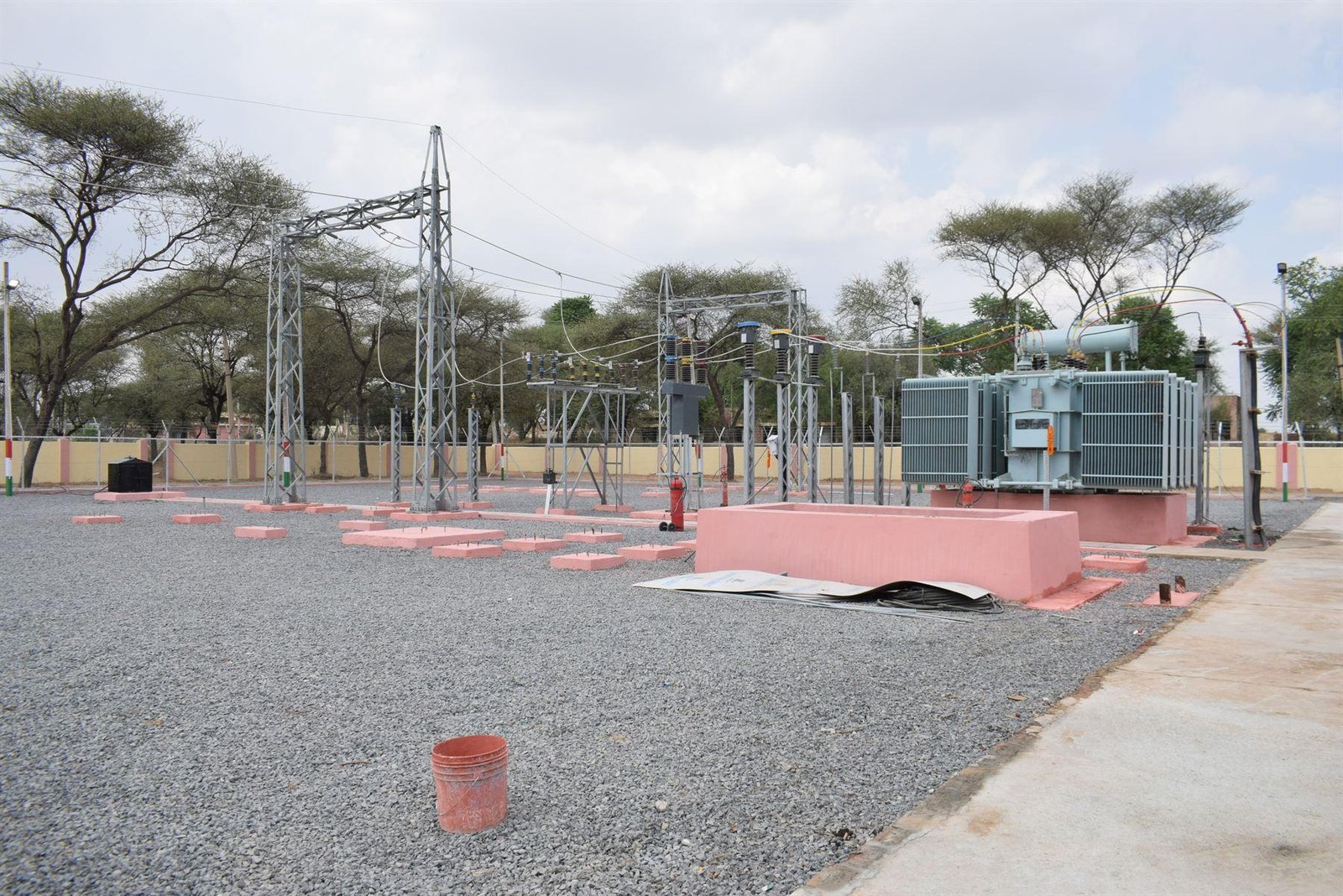
A utility-scale plant is built in inverter blocks. Each block needs an inverter duty transformer that takes the inverter's low-voltage output, typically 600 to 800 V, up to 11 kV or 33 kV. Those feeders run to a pooling substation, where a power transformer steps the collected output up to 33 kV, 66 kV or 132 kV for the grid connection. Between the two sit the conductor, the cable, the structures and the switchgear of an ordinary substation. For a 50 MW plant that is roughly:
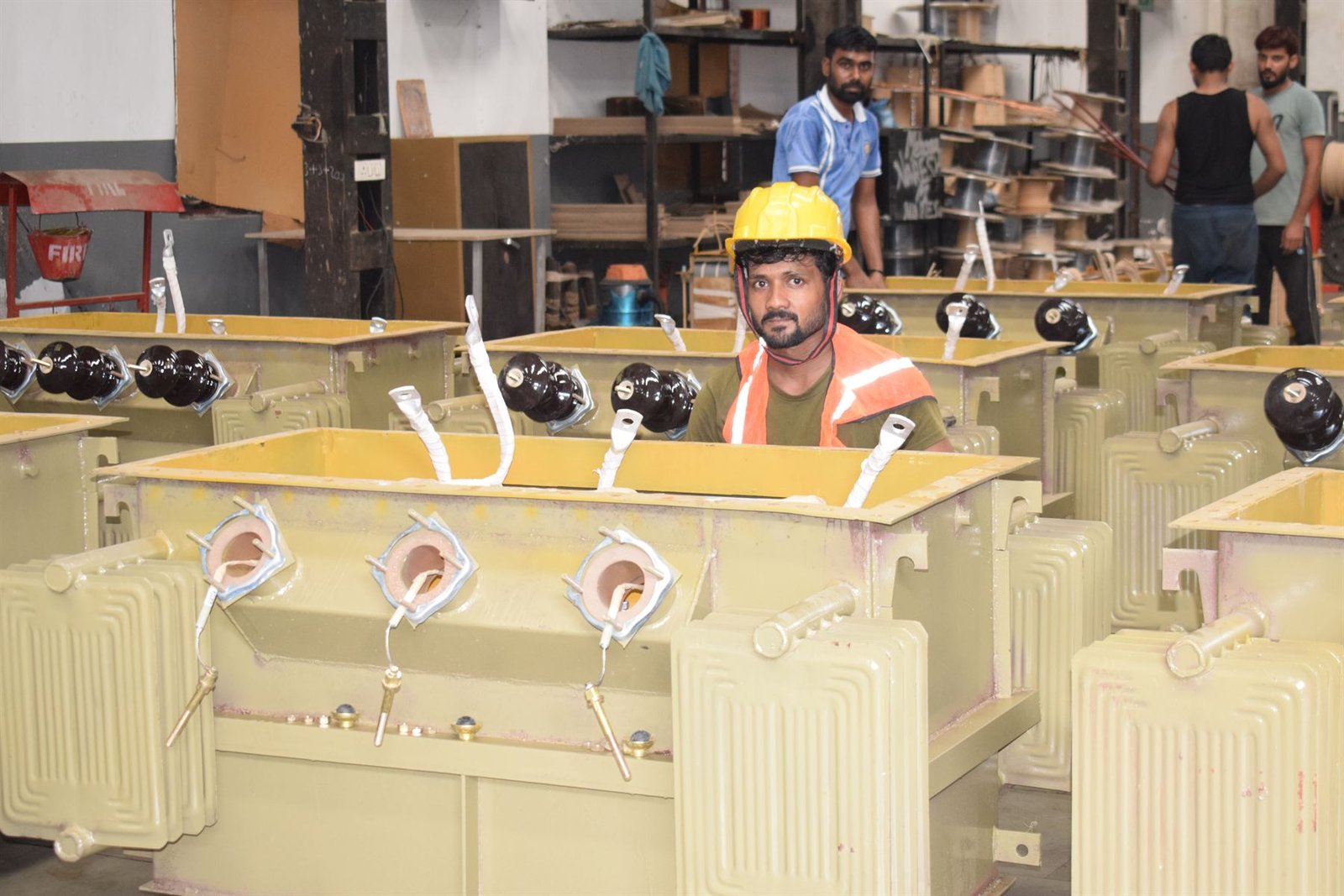
- 15 to 25 inverter duty transformers of 2 to 4 MVA each, dual-secondary, with an electrostatic shield and a harmonic-rated design (see what makes an inverter duty transformer different).
- One or two pooling transformers of 25 to 60 MVA, with an on-load tap changer for grid voltage control.
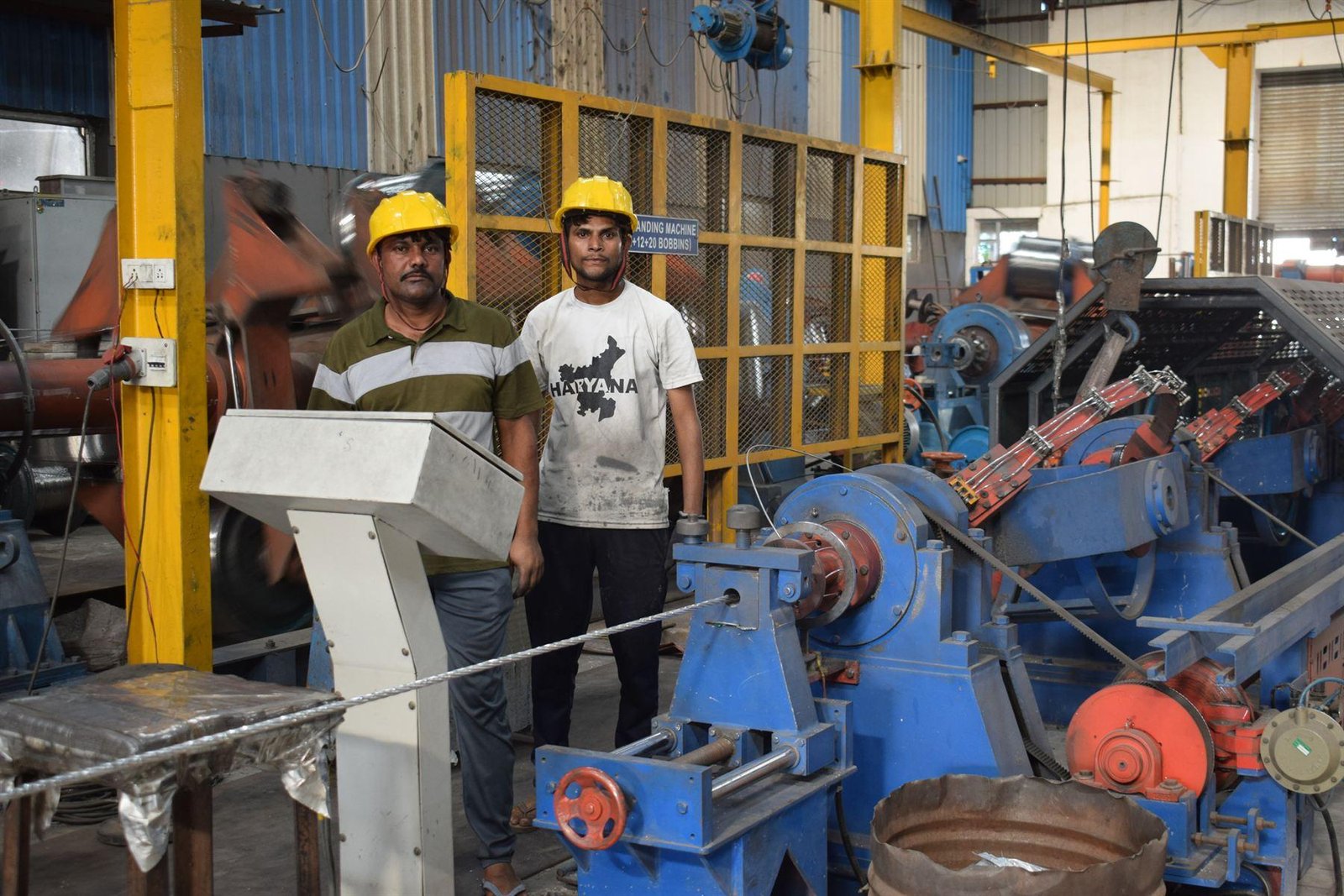
- A 33 kV or 66 kV switchyard with its gantries, isolators, breakers, ACSR or AAAC conductor and control cable, plus the LT and XLPE cable runs within the plant.
The inverter duty units are where the supply is most sensitive, because they are ordered late, in quantity, and to a design that changes with the inverter model. The pooling transformer is the long-lead item and should be the first purchase order on the project.
What it means for a buyer
- Treat the transformer and the transmission connection as the critical path, not the modules. Order the pooling transformer at financial close and the inverter duty units as soon as the inverter is selected.
- Specify to the inverter, not to a generic datasheet. The secondary voltage, number of secondaries, impedance and harmonic spectrum come from the inverter maker and decide the design.
- Buy the substation as a package where possible. One supplier for the transformers, conductor, cable and structures removes the coordination between four vendors that usually costs a project its last six weeks.
Aggarwal Global manufactures inverter duty and solar transformers, 33 kV class power transformers up to 20 MVA, ACSR conductor, LT and XLPE cable and galvanized structures at Bhiwani, and executes 33 kV substations on a turnkey basis. Send the plant single-line diagram and we will return a quotation for the whole package.